Somatic Experiencing: healing stress and trauma through the wisdom of the body

A few months ago I worked with someone who had been in therapy for years. Intelligent, with self-insight to spare. He could explain in detail why he reacted to stress the way he did. But as soon as the pressure rose, his body took over. A clenched jaw, shallow breathing and that familiar rush of adrenaline he had known for years but could not stop.
Understanding why you feel something is not the same as feeling it differently. That is exactly where SE begins.
What is Somatic Experiencing?
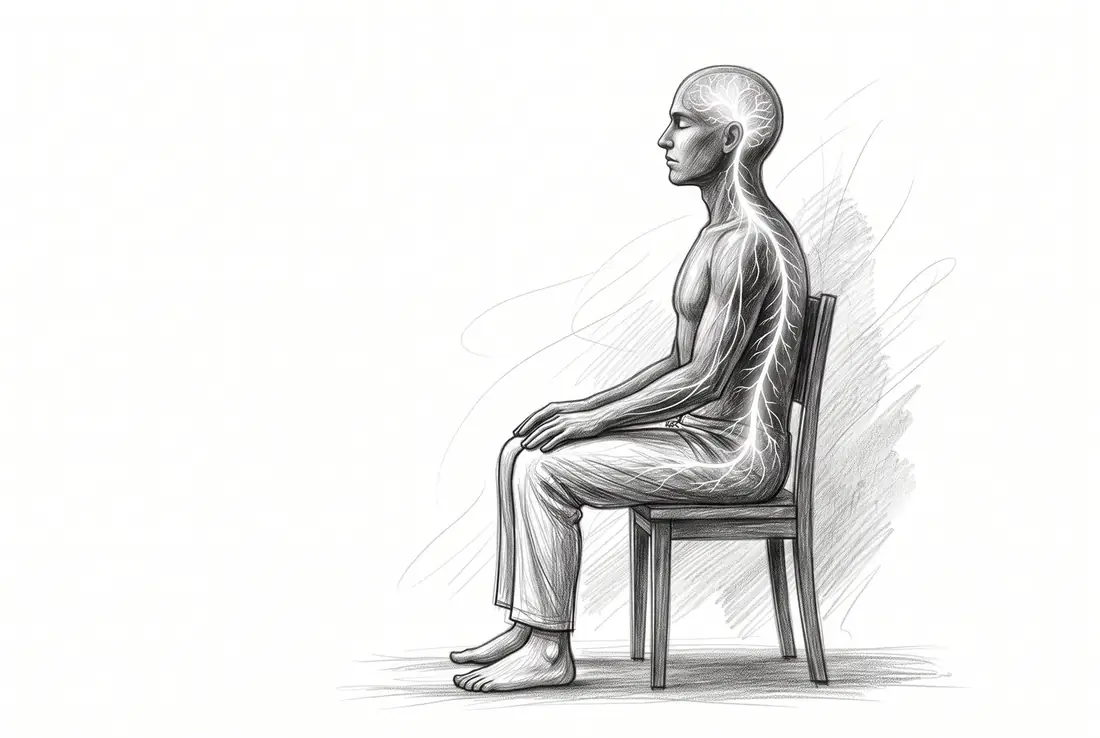
Somatic Experiencing (SE) is a body-oriented method for healing stress and trauma. American psychologist Peter Levine developed SE from a simple but powerful observation: trauma does not live in the event itself, but in how your body responded to it.
An animal in the wild that escapes danger literally shakes off the survival energy afterwards. It trembles, moves, breathes out deeply and its nervous system returns to rest. In humans it often goes differently. We hold back that discharge, push through and keep functioning. The energy stays stuck in the body and sooner or later it shows up as symptoms.
SE helps that stuck energy gently start moving again. You do not need to relive the past. SE guides your nervous system in what it always wanted to do.
How is SE different from talk therapy and mindfulness?
- Talk therapy gives you insight: what you feel, why and how your patterns came about.
- Mindfulness goes a step further: you learn to notice where you feel something in your body.
- Somatic Experiencing goes one layer deeper: you learn to feel without being overwhelmed and you regain space between what you feel and what you do.
Not in your head, but in your body. Stress and trauma sit in your muscles, your breath and your gut. That is why SE starts from the body.
What happens in an SE session?
Rather than focusing on the story, SE directs your attention to what your body is experiencing: subtle sensations, impulses and movements that usually go unnoticed. We work with a few core principles:
- Resources: We always start with what supports you, within yourself or in your surroundings. More on that below.
- Titration: We work in small, manageable steps, so it never becomes too much.
- Pendulation: We move back and forth between tension and calm. This teaches your nervous system that it can handle small waves of stress without being overwhelmed.
- Discharge: Stuck energy is allowed to release through subtle trembling, warmth, a deep breath or movement. Nothing is forced.
A session is calm and slow. We work with what is present in your body right now.
Why are resources so important?
A nervous system can only let go of what it can hold. That is why SE starts with what supports you and only later turns to what is difficult. We call that support resources.
A resource is anything that gives your nervous system a sense of safety, strength or calm. It can be within you or around you:
- a place in your body that feels okay, like your hands or your feet on the floor
- calm breathing or the memory of a moment when you felt good
- a walk in nature, a pet or someone you feel safe with
- something creative, music or movement
When your nervous system knows where to find calm, it becomes easier to stay with tension without being overwhelmed. Your window of tolerance gradually grows. The stronger your resources, the more you can process.
Many people whose nervous system has been on high alert for a long time have lost touch with their resources a little. They still know what used to help, but they no longer feel it. The first work in a session is often finding those resources again and letting them really land in your body.
Want to try it yourself? Think of something or someone that brings you calm and notice what happens in your body. Maybe your breath gets a little deeper or your shoulders drop slightly. Stay with that for a moment. That is your nervous system recognising a resource.
Who is SE for?
SE is for anyone whose nervous system has learned to survive rather than live. For example if you struggle with:
- (chronic) stress or overstimulation
- anxiety or sleep problems
- a vague sense that something is off, even when your life looks fine from the outside
It is also particularly effective for trauma. That can be a single major event, but often it is the quieter kind: years of performing while your body was on high alert (burnout is then often not far away), growing up in an environment where you had to stay on guard, or never really having the space to come to rest.
Over time many people also notice a physical difference: better sleep, less chronic tension, more room for joy and presence. A body that feels safe knows what to do.
What brought me to this work?
For years I functioned well while my nervous system stayed on high alert. Always on, always sharp and always a little too much in my head.
SE taught me to feel the present moment differently. Not through the story, but through what my body was still holding. That distinction changed everything.
That is also what I guide in my practice in Leuven and online, for people who already understand a lot but notice that understanding alone is not enough.
Going beyond understanding
Want to know where your nervous system stands right now? The free Nervous System Scan gives you a clear picture in just a few minutes.
Want to understand why your nervous system reacts the way it does? The Nervous System Guide explains it clearly and shows you step by step what you can change.
Looking for personal guidance? Read more about 1:1 sessions.