Why you cannot seem to relax even when nothing is wrong
You are sitting on the sofa in the evening and the day is done, but your body is still switched on. Shoulders tight, thoughts that will not quiet down and somewhere in your chest a tension you cannot place. Maybe you also wake up at half past three at night, for no reason, with a body that is tired but thoughts already running at full speed.
I know what that is. What I first took for a burnout turned out to be mostly an alarm system that went off far too quickly.
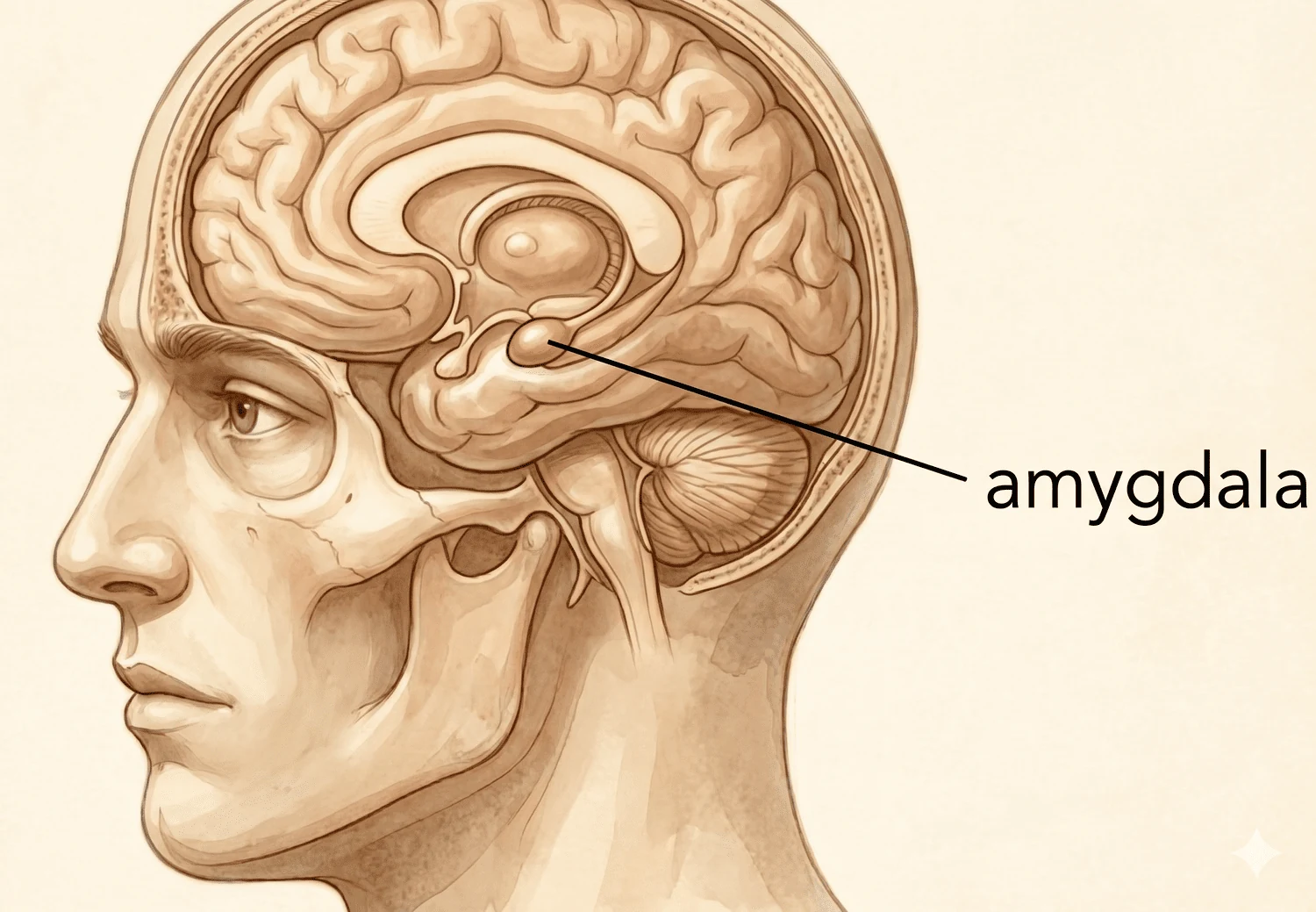
Your amygdala: our internal alarm system
The amygdala is a small part deep in your brain that works as our personal alarm system and signals when danger is near. But there is something most people do not know: the amygdala links itself to what we call implicit memory, which essentially means that your body has a kind of memory. A memory without words, without conscious recollections, just stored experiences in your body. And when there is a trigger, your nervous system can re-experience something from the past, even if it has little to do with what is actually happening now.
An example many people recognise
Imagine your partner says something in a certain tone and something in you shuts down, while you rationally know nothing serious is going on. Or someone does not reply to your message and your thoughts immediately spiral towards the worst. Your amygdala signals danger, while there is no actual danger in that moment. Your body has simply remembered that a certain situation was once threatening. Your muscles tighten, your breathing changes and you physically relive what you experienced before.
That is not an overreaction, that is your nervous system doing exactly what it was made to do. When the amygdala sounds the alarm, the older brain takes over from the newer one. Survival comes first, the rest follows later or not at all.
How that pattern gets stronger
With trauma, the amygdala learns that the world is dangerous. Peter Levine describes it this way: trauma symptoms are not caused by the event itself, but by the survival energy that did not escape the body and got stuck there, causing that energy to keep activating the system. Sometimes even for years.
Chronic stress works the same way, even without one single major traumatic event. Years of work pressure, always switched on, never enough rest, that builds up in the body and the amygdala gets triggered more and more quickly, making small things feel big. Under prolonged stress, the front part of your brain, the part you use to plan and see nuance, temporarily works less well. You literally think less clearly, because the older survival brain takes priority.
Why talking sometimes is not enough
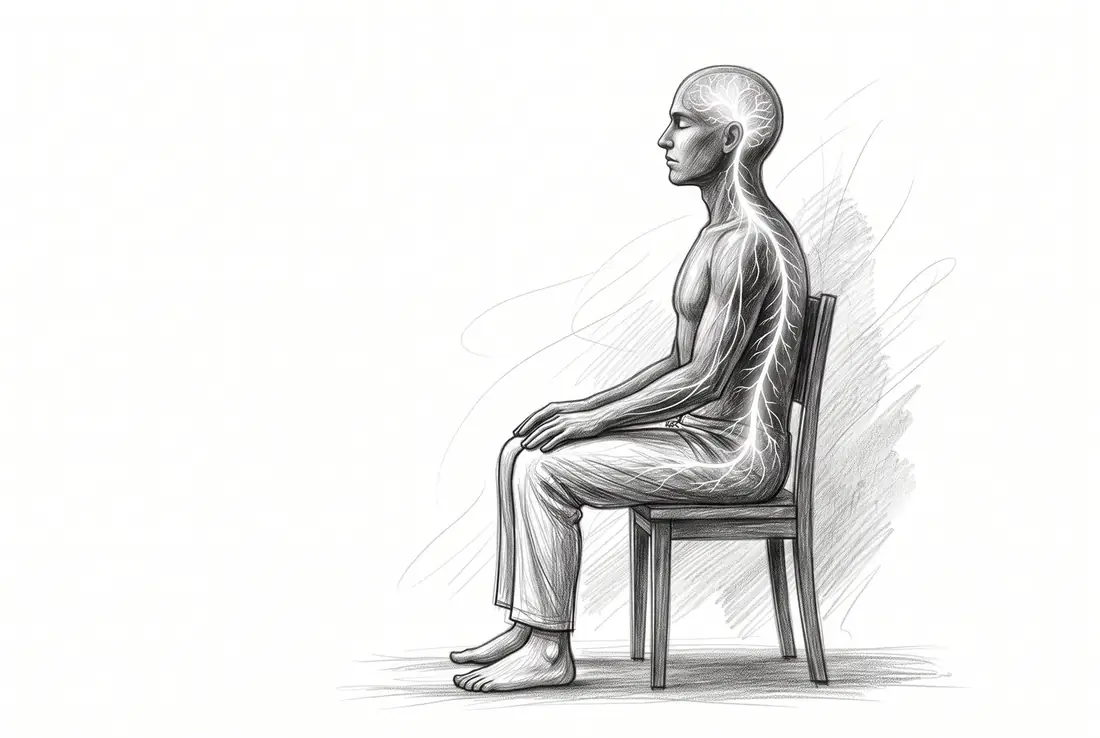
Cognitive therapy is valuable and it helps you recognise patterns and gain insight, but there is something I have experienced myself and now hear from many people who come to me: you can understand everything and still feel it. That is because you cannot access those tensions from the head alone. About 80% of the fibres of the vagus nerve, the large nerve between body and brain, send information from the body to the brain. Only 20% goes the other way. This means your body sends far more information to your brain than the other way around.
How Somatic Experiencing works differently
The key difference is that with Somatic Experiencing you work from the body. You engage with those tensions, sensations and emotions rather than from the head.
What is important to understand here: your body does not distinguish between something that happened in the past and what is happening now. If you talk about a situation from last week that triggered something, your body will already start firing signals in that moment, as if it is happening again. And that is exactly what we can work with. We do not need to go back to the trauma itself, but work with what your body is showing right now.
Not through reasoning, but through what you feel in your body right now.
By calling up small doses of activation again and again and then returning to rest, your nervous system learns something new: I can handle this feeling and I will not be swept away. That is how you activate your body’s self-regulating capacity, step by step.
If you feel like you understand everything but still feel tension, pressure or something that just does not sit right, somatic work can be a way back into communication with your nervous system and your body.
Going beyond understanding
Want to know where your nervous system stands right now? The free Nervous System Scan gives you a clear picture in just a few minutes.
Looking for personal guidance? Book a 1:1 session with me at the practice.